Sunday, August 7, 2022

LOSS OF NATURAL RESOURCES

OVER-EXPLOITATION OF NATURAL RESOURCES


Natural resources refer to anything that our planet offers without human intervention. They essentially guarantee our survival on earth, but they can be exhausted if used at a faster rate than they regenerate. These resources can be renewable or non-renewable.Renewable resources are hard to exhaust as their regeneration is rapid. Examples include things like solar radiation, geothermal energy, biomass, wind, and hydropower. On the other hand, non-renewable resources are limited in nature, and their regeneration might take a very long time. Examples of non-renewable resources include natural gas, coal, fossil fuel, and minerals.

How Fast Are Humans Depleting Natural Resources?

According to the National History Museum, the earth’s population has almost doubled since the 70s, with the consumption of natural resources increasing by 45% per capita. Fortunately, the world is designed in a way that maximizes the flow of natural resources to meet the growing human demand for resources. However, research shows that humans are depleting natural ecosystems at 1.7 times faster than the earth’s regeneration rate, and the rate is growing steadily.Considering the rate at which human beings are depleting natural resources, the Worldwide Fund (WWF) warns that natural resources and living standards will start declining by 2030 if immediate action isn’t taken. The WWF also warns that humans will need 2.5 earth to satisfy our growing demand for resources by 2050. That means it will take earth two and a half years to produce the resources used in a single year. That’s a significant increase considering that humanity is currently using approximately 1.6 earths to supply its population with the required resources. At the current rate, it takes earth approximately a year and eight months to regenerate the resources extracted every year to satisfy our demand. Already, we’re using more ecological resources than nature can regenerate in different ways.


Reasons for Overexploitation of Natural Resources

1. Overpopulation

Over 7.8 billion people are living on the planet today. This population is consistently increasing, and that has been a major contributor towards accelerating the exploitation of natural resources. That’s because an increase in population expands the demand for resources and the conditions necessary to sustain life. Additionally, an increase in population leads to increased ecological contamination

2. Poor Farming Practices

Approximately 1.5 billion hectares (11%) of the world’s land surface is used for crop production. That’s about 36% of the total global land suitable for crop production. While there are still 2.7 billion hectares more that could be used for agricultural purposes, overreliance on land resources for food production could lead to serious issues in the future. Poor irrigation practices are a major contributor to the depletion of land resources. It leads to alkalization and salination of the soil needed for plant growth. The use of heavy farming equipment and machinery and poor soil management practices also destroys the soil structure and makes it unsuitable for growing plants. Other farming practices like the use of excess fungicides, herbicides, and pesticides also kill important micro-organisms in the soil essential for replenishing its nutrients.

3. Logging

According to the World Bank, the net loss of world forests was 1.3 million square kilometers between 1990 and 2016. At the same time, the loss of tropical forests is estimated to happen at the rate of 1% per year, mainly in Latin America. That’s because people are cutting down forests mainly for agricultural purposes to satisfy the growing population’s demand.


More trees are cure every year for building residential complexes and as a source of fuel. These deforestation activities not only lead to the loss of trees but also hundreds of plants and animals. Even worse, increased logging activities contribute to soil erosion.


4. Pollution

The increase in pullulation and anthropogenic activities contributes to the disposal of different pollutants in the environment, gradually exposing the natural ecosystems to degradation. As a result, the air, soil, seas, and lakes are contaminated with sewage, plastics, radioactive materials, and other toxic chemicals. Additionally, the uncontrolled release of carbon dioxide, carbon monoxide, sulfur oxide, and nitrous oxide leads to global warming and the degradation of our ozone layer.


5. Overconsumption of natural resources

Since the first industrial revolution, which opened the door for the exploitation of oil and minerals, the process has been growing gradually over the centuries. Together with advancements in science and technology in the contemporary era, mineral exploitation has become easier and faster. This increased exploitation rate of different minerals has led to a production decline for some materials. For instance, copper, zinc, and oil are expected to decline significantly in the next decade.


6. Industrial and Technological Development

With major technological breakthroughs, more and more countries are becoming industrialized. However, this technological advancement is giving rise to more industries that exploit natural resources and release toxins into the environment. These toxins are deposited in lands, lakes, and soils, altering natural habitats like wildlife and aquatic systems.


Consequences of Overexploiting Our Natural Resources

1. Water Shortages

Deforestation, poor farming practices, and pollution are three main causes of depletion of water resources because of wastage, contamination, and destruction of water catchment areas. In fact, about a billion people suffer from water shortage due to deforestation and groundwater contamination. That further results in food insecurity and famine.


Industries pollute the environment - Image source: Pixabay

Industries pollute the environment - Image source: Pixabay


2. Oil Depletion

A non-renewable resource, oil accounts for approximately 40% of the energy used globally. As such, research suggests that the remaining oil deposits might not last for the next three decades, considering the high rate of exploitation. Its depletion will have devastating effects on several industries, as it’s an essential commodity in mining, planting, transportation, and manufacturing.

3. Loss Of Forest Covers

With over 15 million acres of forests destroyed annually, the world’s natural forest cover is now endangered. Even worse, deforestation has increased greenhouse gasses by 12% to 17% over the last three decades. Other devastating effects include loss of biodiversity, soil erosion, and dramatic climate change.


4. Mineral Depletion

With gasoline, zinc, phosphorous, and others being essential ingredients in manufacturing processes, there has been an increase in the exploitation of these minerals in the last decade. However, that has several devastating effects on nature as minerals like Phosphorous are essential for plant growth.


5. Extinction of Species

Because of deforestation and habitat degradation, some animal species are going extinct. That’s because forest regions host thousands of animals, which are endangered by deforestation and exploitation of forest resources. Other practices like lake pollution and overfishing also drastically reduce the number of marine species.


Solutions To Avoid Overexploitation Of Natural Resources

1. Controlling Deforestation

With programs aimed at reducing deforestation becoming more and more popular worldwide, governments are embracing the initiative and passing laws against the exploitation of forests. Some initiatives also work as incentives to encourage the public to participate in forest conservation to protect animal habitats and unique animal & plant species.


2. Reducing the consumption of oil and other minerals

Oil-rich countries, consumables regulatory bodies, and World Bank should join hands and work towards the common goal of reducing oil and mineral consumption worldwide. Manufacturers may also be educated on alternative ways to replace the minerals, while consumers can be sensitized to re-using some products to reduce wastage.


3. Use of Renewable Energy Sources

Renewable energy sources like wind power and solar can reduce the high dependency on fossil fuels. That will positively impact the environment, as fossil fuel is a major contributor to environmental pollution, global warming, climate change, and natural habitat degradation.


4. Sensitization and awareness creation

The public must be educated on how their daily practices strain the environment and result in the degradation of natural resources. Creating awareness makes it easy to encourage people to restore and preserve the natural environment by participating in conservation initiatives and efforts.


5. Protecting coastal and Wetland ecosystems

Wetlands are areas with lots of groundwater that sustain vegetation cover. Coastal and wetland ecosystems are therefore crucial in sustaining the food chain because they replenish the food chain and avail the nutrients and minerals necessary for animal and plant biodiversity. Coastal ecosystems also help to protect marine life from overfishing.

Bottom Line

While natural ecosystems are essential for plant and animal growth, overexploitation can lead to severe issues like global warming, food insecurity, climate change, and mineral depletion. For this reason, everyone must work on re-using and recycling some materials while embracing conservation initiatives.



Saturday, August 6, 2022

MEIOSIS


REPLICATION AND DISTRIBUTION OF DNA DURING MEIOSIS 

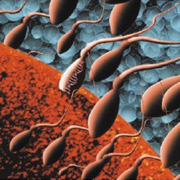
A schematic illustration shows 20 sperm cells swimming towards a much larger egg cell. The egg cell is depicted as an orange sphere; only a portion of the cell is visible in the frame. The sperm are depicted as oval-shaped cells with a single anterior whip-like flagellum. One sperm is shown making contact with and implanting itself into the egg's surface in an event known as fertilization. The oviform body of this sperm is a lighter brown color than the surrounding sperm. A simplified, double-helical DNA molecule is visible inside the cell body of the fertilizing sperm.

Like mitosis, meiosis is a form of eukaryotic cell division. However, these two processes distribute genetic material among the resulting daughter cells in very different ways. Mitosis creates two identical daughter cells that each contain the same number of chromosomes as their parent cell. In contrast, meiosis gives rise to four unique daughter cells, each of which has half the number of chromosomes as the parent cell. Because meiosis creates cells that are destined to become gametes (or reproductive cells), this reduction in chromosome number is critical — without it, the union of two gametes during fertilization would result in offspring with twice the normal number of chromosomes!

Apart from this reduction in chromosome number, meiosis differs from mitosis in yet another way. Specifically, meiosis creates new combinations of genetic material in each of the four daughter cells. These new combinations result from the exchange of DNA between paired chromosomes. Such exchange means that the gametes produced through meiosis exhibit an amazing range of genetic variation.

Finally, unlike mitosis, meiosis involves two rounds of nuclear division, not just one. Despite this fact, many of the other events of meiosis are similar to those that occur in mitosis. For example, prior to undergoing meiosis, a cell goes through an interphase period in which it grows, replicates its chromosomes, and checks all of its systems to ensure that it is ready to divide. Like mitosis, meiosis also has distinct stages called prophase, metaphase, anaphase, and telophase. A key difference, however, is that during meiosis, each of these phases occurs twice — once during the first round of division, called meiosis I, and again during the second round of division, called meiosis II.

What happens during meiosis I?

As previously mentioned, the first round of nuclear division that occurs during the formation of gametes is called meiosis I. It is also known as the reduction division because it results in cells that have half the number of chromosomes as the parent cell. Meiosis I consists of four phases: prophase I, metaphase I, anaphase I, and telophase I.

Prophase I

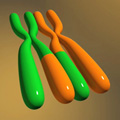
A schematic shows two homologous chromosomes side-by-side. The chromosomes each have two elongated, vertical, parallel arms, held together at a pinched point above their center. The chromosome at left is mostly green, but the lower region of the right arm is orange. The chromosome at right is mostly orange, but the lower region of the left arm is green.
Figure 1: Recombination is the exchange of genetic material between homologous chromosomes.

During prophase I, the chromosomes condense and become visible inside the nucleus. Because each chromosome was duplicated during the S phase that occurred just before prophase I, each now consists of two sister chromatids joined at the centromere. This arrangement means that each chromosome has the shape of an X.

Once this chromosomal condensation has occurred, the members of each chromosome pair (called homologous chromosomes, because they are similar in size and contain similar genes), align next to each other. At this point, the two chromosomes in each pair become tightly associated with each other along their lengths in a process called synapsis. Then, while the homologous chromosomes are tightly paired, the members of each pair trade adjacent bits of DNA in a process called crossing over, also known as recombination (Figure 1). This trading of genetic material creates unique chromosomes that contain new combinations of alleles.

At the end of prophase I, the nuclear membrane finally begins to break down. Outside the nucleus, the spindle grows out from centrosomes on each side of the cell. As in mitosis, the microtubules of the spindle are responsible for moving and arranging the chromosomes during division.

Metaphase I

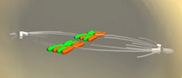
A schematic shows two pairs of homologous chromosomes arranged in a vertical formation in the middle of a cell. Two developing mitotic spindles flank the four chromosomes. Long fibers radiating from the mitotic spindles are attached to the centromere of each chromosome.
Figure 2: Near the end of metaphase I, the homologous chromosomes align on the metaphase plate.
At the start of metaphase I, microtubules emerge from the spindle and attach to the kinetochore near the centromere of each chromosome. In particular, microtubules from one side of the spindle attach to one of the chromosomes in each homologous pair, while microtubules from the other side of the spindle attach to the other member of each pair. With the aid of these microtubules, the chromosome pairs then line up along the equator of the cell, termed the metaphase plate (Figure 2).

Anaphase I

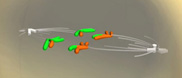
A schematic shows each member in a pair of homologous chromosomes separating from its partner and migrating in opposite directions. White spindle fibers attached to the centromeres of each chromosome are responsible for the movement of the chromosomes to opposite poles of the cell.
Figure 3: During anaphase I, the homologous chromosomes are pulled toward opposite poles of the cell.
During anaphase I, the microtubules disassemble and contract; this, in turn, separates the homologous chromosomes such that the two chromosomes in each pair are pulled toward opposite ends of the cell (Figure 3). This separation means that each of the daughter cells that results from meiosis I will have half the number of chromosomes of the original parent cell after interphase. Also, the sister chromatids in each chromosome still remain connected. As a result, each chromosome maintains its X-shaped structure.

Telophase I

A schematic shows two overlapping, circular cells, each with a nucleus and two chromosomes. The cytoplasmic portions of the cells are light grey, and the nuclei are dark grey. The chromosomes in the left-hand cell are mostly green, but the lower regions of the right chromatids are orange. The chromosomes in the right-hand cell are mostly orange, but the lower regions of the left chromatids are green. Both cells have remnants of the mitotic spindle in the cytoplasm.
Figure 4: Telophase I results in the production of two nonidentical daughter cells, each of which has half the number of chromosomes of the original parent cell.
As the new chromosomes reach the spindle during telophase I, the cytoplasm organizes itself and divides in two. There are now two cells, and each cell contains half the number of chromosomes as the parent cell. In addition, the two daughter cells are not genetically identical to each other because of the recombination that occurred during prophase I (Figure 4).

Interkinesis

At this point, the first division of meiosis is complete. The cell now rests for a bit before beginning the second meiotic division. During this period, called interkinesis, the nuclear membrane in each of the two cells reforms around the chromosomes. In some cells, the spindle also disintegrates and the chromosomes relax (although most often, the spindle remains intact). It is important to note, however, that no chromosomal duplication occurs during this stage.

What happens during meiosis II?

During meiosis II, the two cells once again cycle through four phases of division. Meiosis II is sometimes referred to as an equational divisionbecause it does not reduce chromosome number in the daughter cells — rather, the daughter cells that result from meiosis II have the same number of chromosomes as the "parent" cells that enter meiosis II. (Remember, these "parent" cells already have half the number of chromosomes of the original parent cell thanks to meiosis I.)

Prophase II

As prophase II begins, the chromosomes once again condense into tight structures, and the nuclear membrane disintegrates. In addition, if the spindle was disassembled during interkinesis, it reforms at this point in time.

Metaphase II

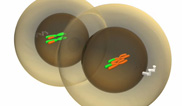
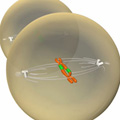
A schematic shows two grey, circular cells: one cell is in the background, eclipsed by a cell in the immediate foreground that appears larger. Inside the larger cell, two chromosomes are aligned along the cell's Z-axis. An orange chromosome with a small portion of green on the lower left arm is shown in the topmost position; a second orange chromosome with a small portion of green on the upper right arm is directly below it. Long fibers radiate from mitotic spindles on the cell's left and right sides and are attached to the centromere of each chromosome. Shorter fibers also emanate from the mitotic spindle, but they are not attached to chromosomes.
Figure 5: During metaphase II, the chromosomes align along the cell's equatorial plate.
The events of metaphase II are similar to those of mitotic metaphase — in both processes, the chromosomes line up along the cell's equatorial plate, also called the metaphase plate, in preparation for their eventual separation (Figure 5).

Anaphase II

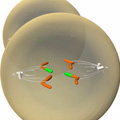
A schematic shows two circular cells: one cell is in the background, eclipsed by a cell in the immediate foreground that appears larger and contains two chromosomes that have been split in half. Each chromatid is attached to spindle fibers at their centromeres. The sister chromatids of each of the chromosomes have become separated due to the action of the spindle fibers and are shown migrating to opposite poles of the cell. For example, the topmost chromosome has been split in half; one half is moving toward the left-hand pole of the cell, and the other half is moving toward the right-hand pole of the cell.
Figure 6: Anaphase II involves separation of the sister chromatids.
During anaphase II, microtubules from each spindle attach to each sister chromatid at the kinetochore. The sister chromatids then separate, and the microtubules pull them to opposite poles of the cell. As in mitosis, each chromatid is now considered a separate chromosome (Figure 6). This means that the cells that result from meiosis II will have the same number of chromosomes as the "parent" cells that entered meiosis II.

Telophase II

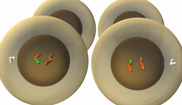
A schematic shows four circular cells: two cells are in the background, eclipsed by two cells in the immediate foreground that appear larger. The cytoplasm of the cells appears light grey, and the nuclei appear dark grey. The two visible cells at front each contain one orange chromatid and one orange chromatid with a green tip.
Figure 7: Telophase II results in the production of four daughter cells.
Finally, in telophase II, nuclear membranes reform around the newly separated chromosomes, which relax and fade from view. As soon as the cytoplasm divides, meiosis is complete. There are now four daughter cells — two from each of the two cells that entered meiosis II — and each daughter cell has half the normal number of chromosomes (Figure 7). Each also contains new mixtures of genes within its chromosomes, thanks to recombination during meiosis I.

Why is meiosis important?

Meiosis is important because it ensures that all organisms produced via sexual reproduction contain the correct number of chromosomes. Meiosis also produces genetic variation by way of the process of recombination. Later, this variation is increased even further when two gametes unite during fertilization, thereby creating offspring with unique combinations of DNA. This constant mixing of parental DNA in sexual reproduction helps fuel the incredible diversity of life on Earth.

Wednesday, August 3, 2022

CANCER AND COCONUT OIL

COCONUT OIL CAN KILL CANCER


Colon cancer is one of the most common cancers, affecting both men and women. There have been a good number of natural remedies and foods that have been linked to prevention of this cancer, but there have not been many studies, which show that these remedies kill cancer cells.

However a recent study published in the Journal Cancer Research has found an active anti-cancer component in coconut oil. Lauric acid, a major ingredient of this oil, has been shown in a University of Adelaide study to kill over 90% of the colon cancer cells after just two days of treatment.

This study was conducted in vitro, but the researchers believe that lauric acid could also induce cancer cell death in clinical studies as well.

Why is it that many in vitro studies never get past this stage and move onto clinical trials? This is because clinical trials are very expensive, making it difficult for those who are not involved in mainstream pharmaceutical research, to find funding.

Pharmaceutical companies have little interest in funding these types of studies, as they cannot patent the oil, so there is no money in it for them.
Clinical studies by the American Society for Nutrition have shown that the fats in coconut oil can help to prevent and treat diabetes, herpes, hepatitis, gallbladder disease, cancer, and Crohn’s disease.

Coconut oil has also be shown to decrease the toxic and often devastating side effects of chemotherapy.

Sunday, July 18, 2021

MITOSIS


Mitosis is a process of nuclear division in eukaryotic cells that occurs when a parent cell divides to produce two identical daughter cells. During cell division, mitosis refers specifically to the separation of the duplicated genetic material carried in the nucleus. Mitosis is conventionally divided into five stages known as prophase, prometaphase, metaphase, anaphase, and telophase. While mitosis is taking place, there is no cell growth and all of the cellular energy is focused on cell division.

During prophase, the replicated pairs of chromosomes condense and compact themselves. The pairs of chromosomes that have been replicated are called sister chromatids, and they remain joined at a central point called the centromere. A large structure called the mitotic spindle also forms from long proteins called microtubules on each side, or pole, of the cell.

During prometaphase, the nuclear envelope that encloses the nucleus breaks down, and the nucleus is no longer separated from the cytoplasm. Protein formations called kinetochores form around the centromere. The mitotic spindle extends from the poles and attaches to the kinetochores. During metaphase, the microtubules pull the sister chromatids back and forth until they align in a plane, called the equatorial plane, along the center of the cell.

During anaphase, the sister chromatids are separated simultaneously at their centromeres. The separated chromosomes are then pulled by the spindle to opposite poles of the cell. Anaphase ensures that each daughter cell receives an identical set of chromosomes.

Finally, during telophase, a nuclear membrane forms around each set of chromosomes to separate the nuclear DNA from the cytoplasm. The chromosomes begin to uncoil, which makes them diffuse and less compact. Along with telophase, the cell undergoes a separate process called cytokinesis that divides the cytoplasm of the parental cell into two daughter cells.


LOSS OF NATURAL RESOURCES

OVER-EXPLOITATION OF NATURAL RESOURCES Natural resources refer to anything that our planet offers without human intervention. They essential...